MBA Finance
-
Graduate in 14 months full-time, or 24 months part-time.
-
Accredited by the Chartered Management Institute (CMI).
-
Ranked 12th for employment outcomes in the UK*
-
Total fees: £8,880 – pay in full or pay per module.
Graduate in 14 months full-time, or 24 months part-time.
Accredited by the Chartered Management Institute (CMI).
Ranked 12th for employment outcomes in the UK*
Total fees: £8,880 – pay in full or pay per module.
Graduate in just 14 months.
Start within weeks with monthly start dates.
Competitive tuition – £8,880 total.
Beating Russell Group unis on career outcomes*
Curriculum shaped by modern industry.
Career support and events, 24/7 job portal.
Study flexibly within a weekly structure.
Flex between full and part-time.
Built for digital from day one.
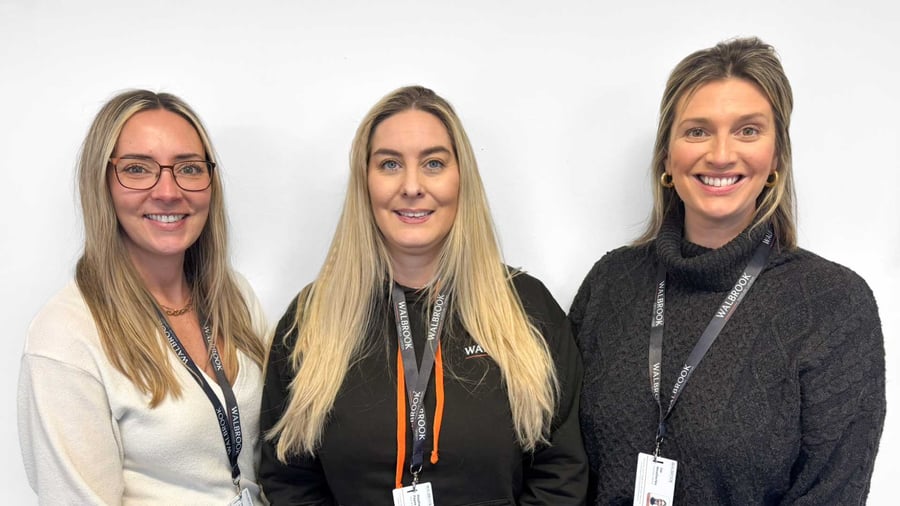
Achieve senior financial leadership without pausing your career. With 45% of businesses planning to grow their finance teams in 2026 (Robert Half 2026 Salary Guide), prioritising blended expertise across finance and digital capability, our MBA Finance degree prepares you to step confidently into high-impact leadership roles.
Why this MBA?
Built for the growing demand in finance leadership in 2026.
For finance professionals ready to shape strategy and influence board-level decisions.
Designed in the City of London, a world-leading financial capital.
Location:
‣ 100% Online, distance learning
Accredited by:
‣ Chartered Management Institute (CMI)
Start dates:
‣ Start any month
Duration:
‣ Full-time: 14 months
‣ Part-time: 24 months
Tuition fees and funding:
‣ Total programme cost is £8,880
‣ Secure your place by paying for your first one or two modules, depending on whether you choose full-time or part-time study.
Entry requirements:
‣ 2:2 honours degree and above (or equivalent) and typically 2+ years of professional experience.
‣ Alternatively, you can apply with 2+ years of relevant work experience alone.
Our online MBA Finance degree is accredited by the Chartered Management Institute (CMI). This means you’ll get an additional CMI professional qualification alongside your degree, achieving Foundation Chartered Manager (fCMgr) status. This puts you on the path to full Chartered Manager status – and giving your career that extra boost. With CMI accreditation, you can be confident this course meets international standards for content, teaching quality, and resources.
The prices shown below are for our online MBAs only. They are inclusive of your first module(s) payment and don't include any reductions.
Full-time: 14 months | Part-time: 24 months
£8,880
in total
You'll study 10x 15-credit modules and 1x 30-credit Capstone module in total (approx. 17-30 hrs/week).
Full-time: 14 months | Part-time: 24 months
£740
per 15-credit module
You'll study 10x 15-credit modules. Your final 30-credit Capstone module will be charged at £1,480.
Total tuition fees: £8,880. You can pay for your MBA per module, or in full before you start your studies.
If you choose to pay in full, you’ll receive a 15% reduction on your total tuition fees.
If you choose to pay per module, your payment schedule will depend on whether you choose full or part-time study:
If you apply as a full-time student, you’ll need to pay for two modules upfront to confirm your place, then continue to pay in two-module instalments as you progress.
If you apply as a part-time student, you’ll pay for one module upfront, then continue to pay per module before each one begins.
If you’re a UK student, you may be eligible for a government master's loan from Student Finance England for our online MBA degrees. The Student Loans Company (SLC) will pay the loan directly to you after you start your studies. So, it’s your responsibility to make your module payments to us directly. Find out more about funding your Walbrook MBA with a UK master's loan >
Want to see exactly when payments are due? Open the payment schedule for our next two start dates below.
April 2026 start date
May 2026 start date
Alumni receive a 10% tuition fee discount. If you’re eligible, our enrolment team can provide your personalised payment schedule.
Every application is different. If you’re not sure whether you meet the MBA Finance entry requirements, or if you have any questions, contact us for advice.
To apply for the Walbrook MBA, you’ll need to meet one of the following:
Option 1:
A 2:2 honours degree (or equivalent) from a recognised institution plus relevant professional experience (typically 2+ years).
If you have less than 2 years’ experience, you’re still encouraged to apply. We’ll review your academic and professional background on a case-by-case basis.
Option 2:
A minimum of 2 years of relevant professional experience.
Thinking of transferring institutions or have you studied before? You can apply to transfer up to 60 credits towards your MBA. Please note that credits can’t be awarded for the Research Development or Capstone Project modules.
Review our recognition of prior learning process.
Speak to our Enrolment Team.
Submit a recognition of prior learning form alongside your application.
Overseas qualifications may be accepted and will be subject to evidence of equivalency normally verified through ECCTIS (UK ENIC).
If you’re a non-native English speaker, you’ll be asked to provide proof of your English language proficiency in one of the following forms. Alternatively, you may be accepted if you have previously studied in English at an appropriate level and attended a recognised institution.
IELTS
Evidence of a score of IELTS Level 6.5 or above with no element below 6.0.
TOEFL iBT®
Evidence of a score of 88 overall (with 18 in reading, 19 in listening, 19 in speaking and 23 in writing).
Trinity College London Integrated Skills in English (ISE)
Evidence of a score of ISE II with distinction in each skill.
Cambridge Certificate of Proficiency or Cambridge Certificate of Advanced English
Evidence of a score of 176 overall, with 169 in each component.
My favourite part of studying with Walbrook is definitely the flexibility that the online degree offers. I think without that there wouldn't have been away for me to achieve this level of qualification. I haven't felt a massive change in my routine and don't feel like I have to give up much either to fit the studying in.
Dean Piper
Walbrook online MBA Finance student

I would say just go for it. I am currently in full time employment, so being able to study at my own time and being able to be in control of my own studying was really important, and Walbrook provided that as part of their online degrees.
Aleksandra Anastasova
Walbrook online MBA student
Explore the strategic and technical sides of finance while developing your leadership, communication and decision-making skills. This MBA Finance programme covers core business disciplines alongside in-depth modules in corporate finance and international financial management. You’ll apply what you learn to real-world scenarios, preparing you for senior roles where financial leadership is key.
On this online MBA Finance, you’ll study a series of carefully designed modules. With flexible monthly starts, you’ll join the next available module and study alongside a cohort learning the same subject at the same time.
Business Finance
Gain a practical understanding of financial planning, capital budgeting and valuation. You’ll explore how to manage risk, fund growth and evaluate investment opportunities to drive business success.
International Finance Management
Examine how financial decision-making is shaped by global markets, exchange rates and risk. Learn how to manage multinational financial strategies and make informed decisions in volatile environments.
Environmental Focus
Understand how businesses can respond to environmental and sustainability challenges. You’ll explore responsible leadership and strategic planning through case studies that highlight global risks and opportunities. Apply your insights to practical business recommendations.
Strategy Formulation and Implementation
Discover how successful organisations identify and act on strategic opportunities. You’ll use frameworks and models to evaluate risk, assess competitive positioning and plan for sustainable growth.
Change Management
Examine the drivers and impact of change on organisations. Learn how communication, leadership and innovation play a role in successful transitions. Design a change management plan to solve a real business challenge.
Marketing Communication
Explore how strategic marketing communications deliver value to customers and stakeholders. Learn to create effective messaging, evaluate brand performance, and build integrated plans that align with business goals.
Agile HRM
Explore how people strategy contributes to business performance. You’ll analyse emerging workforce trends and develop HR approaches that support long-term organisational goals in a global environment. Build skills in planning, strategy and leadership across diverse teams.
Financial and Business Intelligence
Use financial data and business intelligence tools to support better decision-making. You’ll analyse performance, evaluate financial health and identify investment opportunities. Gain experience using tools that align with real workplace scenarios.
Research Methods
Develop the tools and techniques needed for postgraduate-level research. You’ll learn how to critically analyse sources, formulate research questions and design ethical research projects – laying the groundwork for your final dissertation.
Research Development
Clarify your research focus and prepare for your final project. You’ll explore an area of finance that matters to you, developing a proposal that includes an infographic and video pitch to communicate your ideas.
Research Project
Complete a research project focused on a finance-related business issue. Conduct independent research, analyse data and make strategic recommendations that support your professional goals.
Your module schedule depends on the month you start, and whether you study full or part-time. You'll study each module once, completing all taught modules before moving on to your final two modules: Research Development and Research Project.
|
Module start date |
Module name |
Assessment details |
| 6 April 2026 | Strategy Formulation and Implementation |
1. Forum discussion contribution – 10% 2. Video presentation – 30% 3. Strategic Implementation Plan – 60% |
| 4 May 2026 | Environmental Focus |
1. Report – 30% 2. Reflective practice – 25% 3. Poster presentation – 45% |
| 1 June 2026 | Change Management |
1. Change narrative and rationale – 20% 2. Stakeholder engagement presentation – 30% 3. Implementation plan – 50% |
| 6 July 2026 | Marketing Communication |
1. Discussion post and peer reply – 20% 2. Poster presentation – 30% 3. Report – 50% |
| 3 August 2026 | Financial and Business Intelligence |
1. Finance analysis presentation – 20% 2. Case study presentation – 30% 3. Reflective blog and AI usage reflection – 50% |
| 7 September 2026 | Agile HRM |
1. Background to business/organisation project – 20% 2. Business/organisation analysis – 40% 3. Business Case – 40% |
| 5 October 2026 | Research Methods |
1. Portfolio – 100% |
| 2 November 2026 | Business Finance |
1. Report – 20% 2. Video presentation – 30% 3. Report – 50% |
| 7 December 2026 | International Finance Management |
Assessment details TBC |
| 4 January 2027 | Strategy Formulation and Implementation |
1. Forum discussion contribution – 10% 2. Video presentation – 30% 3. Strategic Implementation Plan – 60% |
| 1 February 2027 | Environmental Focus |
1. Report – 30% 2. Reflective practice – 25% 3. Poster presentation – 45% |
| 1 March 2027 | Change Management |
1. Change narrative and rationale – 20% 2. Stakeholder engagement presentation – 30% 3. Implementation plan – 50% |
| 5 April 2027 | Marketing Communication |
1. Discussion post and peer reply – 20% 2. Poster presentation – 30% 3. Report – 50% |
| 3 May 2027 | Financial and Business Intelligence |
1. Finance analysis presentation – 20% 2. Case study presentation – 30% 3. Reflective blog and AI usage reflection – 50% |
| 7 June 2027 | Agile HRM |
1. Background to business/organisation project – 20% 2. Business/organisation analysis – 40% 3. Business Case – 40% |
| 5 July 2027 | Research Methods |
1. Portfolio – 100% |
| 2 August 2027 | Business Finance |
1. Report – 20% 2. Video presentation – 30% 3. Report – 50% |
| 6 September 2027 | International Finance Management |
Assessment details TBC |
| 4 October 2027 | Strategy Formulation and Implementation |
1. Forum discussion contribution – 10% 2. Video presentation – 30% 3. Strategic Implementation Plan – 60% |
| 1 November 2027 | Environmental Focus |
1. Report – 30% 2. Reflective practice – 25% 3. Poster presentation – 45% |
| 6 December 2027 | Change Management |
1. Change narrative and rationale – 20% 2. Stakeholder engagement presentation – 30% 3. Implementation plan – 50% |
| 3 January 2028 | Marketing Communication |
1. Discussion post and peer reply – 20% 2. Poster presentation – 30% 3. Report – 50% |
| 7 February 2028 | Financial and Business Intelligence |
1. Finance analysis presentation – 20% 2. Case study presentation – 30% 3. Reflective blog and AI usage reflection – 50% |
| 6 March 2028 | Agile HRM |
1. Background to business/organisation project – 20% 2. Business/organisation analysis – 40% 3. Business Case – 40% |
You can register for your Capstone modules once you have studied at least seven of the nine taught modules:
|
Module name |
Assessment details |
| Research Development |
1. Research proposal – 20% 2. Literature review – 80% |
| Research Project | 1. Thesis – 100% |
Most modules include more than one assessment, helping you build skills gradually and apply your learning in different ways. You might complete two or three shorter tasks instead of one final assignment – weighted, for example, at 25%, 25% and 50%.
Here’s a snapshot of the main types of assessments you’ll complete across your core modules.
Report: write a structured academic or business report that demonstrates critical analysis and application of theory.
Strategic plan or business case: produce a strategic plan or business case in response to organisational challenges, supported by research and analysis.
Poster presentation: create a visual summary of your analysis, such as a strategy or proposal, with a short written explanation.
Learning log or reflective practice: write a short reflective piece to evaluate your professional learning, development or application of theory in practice.
Infographic and commentary: design an infographic to present a business or research idea, supported by a short written explanation.
Presentation or video pitch: present your strategic analysis or project proposal through a recorded or live presentation.
Research thesis: complete a dissertation investigating a business issue relevant to your role or specialism, with independent research and strategic recommendations.
*Please note, module schedule and assessments are subject to change.
Studying online with Walbrook is designed to be flexible and engaging, giving you access to everything you need to succeed:
Full-time students should set aside around 30 hours per week.
You'll start a new 8-week module each month, so while you’re beginning your learning in one module, you’ll be preparing for assessment in the other.
Part-time students should set aside around 17 hours per week.
You'll start a new 8-week module every other month, making it easier to fit your studies around work, family and everyday life.
Your self-study will include:
Engaging programme content delivered via our online study platform.
Case studies and applied tasks that link theory to real business scenarios.
Preparation for assessments including reports, proposals and project work.
Our support is built around you and your success. From enrolment to graduation, you’ll have access to digital academic tools that help you study in a way that works for you, and people who are here to help.
You'll benefit from:
Digital learning materials including key readings, videos, and research resources.
Access to a digital library to support your independent research.
Support to help you stay on track and direct you to the right teams when needed.
Applying to study an online MBA at Walbrook is simple, and you can do it directly.
Review our entry requirements to make sure you meet them.
Apply through our secure online application portal and upload your documents as you go.
By paying for your first module (part-time) or first two modules (full-time).
Any questions about our online degrees or studying at Walbrook? Our Enrolment Advisors are here to help.
Our office is open Monday to Friday from 8.00am to 5.30pm UK time (excluding UK public holidays).
An MBA Finance degree prepares you for high-level financial leadership across industries. You’ll develop the confidence and strategic insight to lead complex financial decisions, drive business performance, and shape organisational growth. Whether you’re stepping into a senior management role or aiming for the C-suite, this qualification opens doors.

Finance managers oversee planning, budgeting and analysis that drive business decisions. You’ll be responsible for reporting on performance, assessing risk and helping shape strategy. With your MBA, you’ll bring technical ability, and leadership and business acumen to the table.
Average UK salary: £59,528
In this senior-level role, you’ll lead teams in evaluating internal controls, regulatory compliance and financial reporting. Your MBA will help you think beyond the numbers – guiding risk mitigation, ethical governance and strategic recommendations at the highest level.
Average UK salary: £78,975
As CFO, you’ll be responsible for the financial health and strategic direction of your organisation. From investment strategy to risk management, this role requires deep financial expertise, commercial insight and confident leadership – all developed through your MBA.
Average UK salary: £161,173
*Salaries listed from glassdoor.co.uk and accurate as of February 2026.
You can complete your MBA online in around 14 months full-time or 24 months part-time. On the full-time route, you’ll study two modules at a time (with a short gap between start dates). On the part-time route, you’ll study one module at a time.
The MBA is made up of 180 credits, including core modules and a final Capstone Project made up of two research-based modules.
The total fees are £8,880 for our online MBA.
Payment depends on your study mode:
Full-time: Pay for two modules upfront, then in two-module instalments.
Part-time: Pay for one module upfront, then before each new module.
UK students may be eligible for a government master’s loan.
Your MBA is delivered through an online study platform, where you’ll study either one or two modules at a time depending on your study mode. Full-time students start a new module every month, so modules overlap. Part-time students complete one module at a time.
Here’s what you can expect:
Weekly learning units to guide your progress
Readings and case studies
Videos and narrated presentations (mini-lectures)
Online discussion forums
Quizzes and tasks to check your understanding
You’ll have the freedom to plan your study time around work and life – but within a guided schedule that helps you stay focused, connected, and on track to succeed.
With CMI Dual Accreditation, you’ll graduate with Foundation Chartered Manager (fCMgr) status. This means you’ll:
get an additional, highly respected CMI professional qualification alongside your degree.
be on the path to full Chartered Manager status – the highest professional accolade awarded by CMI under its Royal Charter.
You’ll also receive complimentary CMI membership for the duration of your studies. This gives you access to career development tools, study resources, exclusive events and a powerful professional network.
Benefits of your membership include:
Employability Skills Diagnostic
Career Development Centres
ManagementDirect online resource portal
mentoring opportunities with experienced managers
networking and events with industry professionals,
the Qwell mental wellbeing platform to support your personal wellbeing during your studies.
The Chartered Management Institute (CMI) is the only Chartered body for management and leadership.
With over 75 years of expertise and a Royal Charter, CMI supports more than 230,000 members and works with over 1,000 businesses and education providers worldwide. It provides trusted accreditation, flexible learning pathways and internationally recognised professional qualifications.
CMI is also the awarding body for Chartered Manager (CMgr) – the highest professional status available for practising managers and leaders. Its focus is simple: to help people at every stage of their career develop the confidence, credibility and skills to become effective, successful leaders.
Graduate in 14 months full-time, or flex to part-time.
Ranked 12th for employment outcomes in the UK*
Total fees: £8,880 – pay in full or pay per module.

*National Graduate Outcomes Survey, 2024