
There's a moment many people new to trade finance know well. You're in the room with seasoned professionals, and somewhere between letters of credit and risk terminology, you realise that a basic understanding of trade finance isn't the same as truly speaking the language. The abbreviations alone can feel like a new dialect – and navigating complex technical terminology without a firm grounding can leave even the most capable professionals feeling out of their depth.
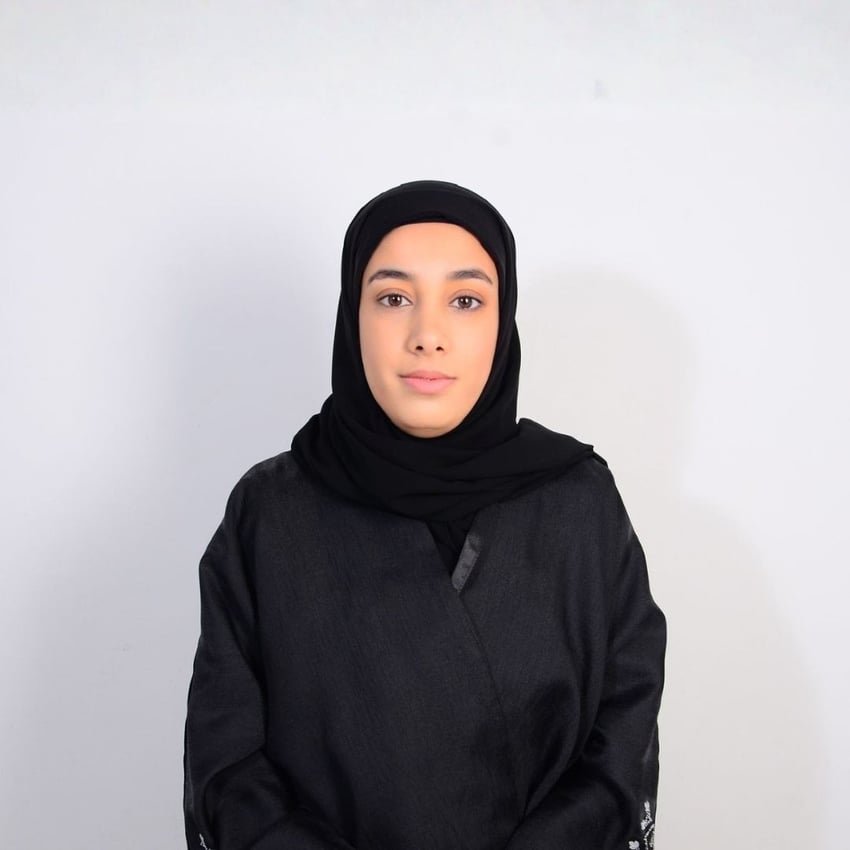
For Amaal Mohammed, Trade Finance Manager at Bahrain Islamic Bank, that moment was the catalyst for a qualification journey that would change everything.
Amaal is a mother of two, and one of the first Bahraini woman to achieve the Qualified Trade Finance Expert (QTFE) Diploma, and she has studied three professional qualifications with LIBF (Part of Walbrook Institute London) – the Certificate in International Trade Finance (CITF), the Certificate for Documentary Credit Specialists (CDCS), and the Certificate in Supply Chain Finance (CSCF).
Starting from the basics
"Honestly speaking, I only knew the basic definitions of these terms and I was lacking confidence to apply this terminology in complex scenarios of trade finance," says Amaal. "It was very challenging."
It's a feeling many professionals share but rarely admit out loud. International trade finance is built on precise language – documentary credits, risk assessments, supply chain instruments – and knowing what a term means in theory is a world away from knowing how to apply it confidently in practice. Amaal found herself spending extra time searching for terminology, which slowed her down and dented her confidence. Something had to change.
How qualifications change the conversation
Pursuing her LIBF qualifications transformed not just Amaal's knowledge base, but her confidence in the room.
"Trade finance certification has given me the tools that I need to interpret documents, to assess the risk, to communicate with the client, to have more clarity in daily transactions and complex transactions," she explains.
That shift – from knowing definitions to genuinely understanding how to use them – is exactly what professional qualifications are designed to deliver. The CITF gave Amaal a structured foundation across trade finance instruments and global market dynamics. The CDCS deepened her expertise as a documentary credit specialist, connecting theory to real-world case studies. The CSCF then took supply chain finance from concept to implementation, with Amaal directly contributing to the launch of a new supply chain finance product at her bank.
"These LIBF certifications, the three which I have studied, each of them actually added layers of opportunities for myself," Amaal added.
Speaking the language – and building trust
One of the most powerful outcomes of professional qualifications isn't just what you know. It's how others perceive you.
"Trade finance certification has helped me in a professional way to understand this technical language and build that trust with the clients," says Amaal. "If the client sees this certification has been gained by a professional who is working and who is advising, their confidence is increased and they are trusting the solution that you are giving them."
That credibility isn't something you can fake. It comes from genuinely understanding the material – not just the vocabulary, but the nuance behind it. And it shows, in every client meeting, every complex transaction, every moment you need to make a decision under pressure.
"These qualifications helped me in my daily work to sharpen my abilities and spot the risk, seize the opportunity. Whenever there is an opportunity, I'm able to handle it, make the decision quickly and increase customer satisfaction," she adds.
Does Amaal's story inspire you to study with LIBF?
Take control of your career today:
-
Develop skills you can apply immediately
- Our programmes are 100% online and designed to fit around your career
From professional to pioneer
The impact of Amaal's qualifications didn't stop at her day-to-day work. After completing her three LIBF programmes, Amaal went on to achieve the QTFE Diploma.
"The Qualified Trade Finance Expert Diploma gave me an opportunity to elevate my profile as a trade finance expert. It's opened the door for me in having strategic roles in Bahrain," she shares. "It's opened multiple doors for me."
Speaking opportunities at industry summits, recognition across the region, a leadership role heading a new transaction banking unit – these are the kinds of outcomes that go well beyond the exam room. They're what happens when structured learning meets real-world ambition.
The journey isn't easy – and that's the point
Amaal is the first to acknowledge that studying alongside a demanding full-time role and family life isn't straightforward.
"It's not an easy journey. It's had layers of challenges that you have to move on to turn into opportunity. But the sense of achievement when you get the qualifications, balancing your work and study life with your family – you have reached your goals."
That sense of achievement matters. These aren't just credentials to add to a CV. They represent a genuine transformation in how you think, how you communicate, and how you show up for your clients and your organisation.
Ready to unlock the language of trade?
If you're new to trade finance and want to move from feeling out of your depth to truly commanding the room, LIBF's professional qualifications are designed to get you there.
"LIBF certification is globally respected and it's designed for real application of trade finance," says Amaal.
Whether you're just starting out or looking to take your expertise to the next level, LIBF offers a suite of trade finance qualifications – including the CITF, CDCS, and CSCF – built for professionals who are serious about progressing their careers.
Explore LIBF's trade and transaction banking qualifications and discover your potential today.
Try our online programmes that fit around your commitments
That’s the best thing about LIBF – managing studying alongside work. It was structured in a flexible way that I meant if I wanted to get ahead, I could. If I fell behind, I could catch up."
Sonny Kurmi
LIBF Learner