Women in STEM: Diversity in Computer Science
Women in STEM: Quick summary
- Women make up 28.2% of the global STEM workforce – representation is improving, but women remain underrepresented across many STEM careers (Global Gender Gap Report, World Economic Forum).
- Women achieved 30.8% of core STEM qualifications in the UK in 2024/25 – with representation varying significantly between different STEM subjects (WISE analysis of HESA data).
- 70% of young UK women are interested in studying STEM subjects – showing strong underlying interest in women pursuing STEM careers (Walbrook, 2025).
- Women remain underrepresented in technology roles – they currently make up around 22% of the global tech workforce (Tech Talent & Salary Report 2026, Harvey Nash).
- Technology continues to offer growing career opportunities – AI and machine learning, big data, and software development are among the fastest-growing job areas globally (Future of Job's Report 2025, World Economic Forum).
Why diversity in computer science matters
Some of the earliest pioneers of computing were women. But their contributions have historically been underappreciated. Now, their role in STEM is finally being recognised as more women step forward as leaders in science and technology. From ethical AI to internet infrastructure, women have shaped, and continue to shape, innovations that impact us all.
But unfortunately, women are still underrepresented across STEM fields. The World Economic Forum's latest 2024 Global Gender Gap Report reported that women only accounted for 28.2% of the STEM workforce. Progress is happening, but there's still more that can be done to improve representation, and make STEM careers accessible to more women.
As a higher education provider in the UK, we know we have a responsibility to remove these barriers and pave the way for more women to enter STEM fields like computer science. With more women in stem fields, we can hope to develop a more inclusive future – and more inclusive technology for everyone.
The current landscape for women in computer science
Progress for women in STEM subjects has improved markedly over the years, but there is plenty of data to show how women continue to be underrepresented in areas such as computing and technology.
Representation of women in STEM: the stats
So, what does the field currently look like for women?
- Women make up only 28.2% of the global STEM workforce, despite making up 47.3% of the workforce in non-STEM sectors (Global Gender Gap Report 2024, World Economic Forum).
- Women only make up 35% of STEM graduates globally (UNESCO), and this number drops to 30.8% in the UK (WISE analysis of the latest Higher Education Statistics Agency (HESA) data).
- Women only make up 33% of scientific researchers globally (United Nations).
When it comes to technology specifically:
Signs of progress for women in STEM
Yes, the stats are a little disheartening, and the figures above show there's still plenty of room for progress when it comes to women in STEM. But the situation is improving, especially in education.
According to WISE analysis of the latest Higher Education Statistics Agency (HESA) data:
- Women now account for 46.6% of Physical sciences qualifications, while number of these qualifications achieved by women has increased by 22% since 2020.
- The number of computing qualifications achieved by women has increased by 172% since 2020, reaching an all-time high of 19,565 in 2024/25.
- And for those who didn't study a STEM subject at undergraduate level, data shows that women are more likely to switch into a tech role (after working previously in a non-tech role) than men (Tech Talent & Salary Report 2026, Harvey Nash).
What's more, representation is changing, with many famous women in computer science, both historically and working in STEM today. From Ada Lovelace to Radia Perlman, young women have role models to look up to. And there are many initiatives to involve more women in computing from companies and higher education organisations trying to right the gender gap and encourage women in STEM careers. Every new female science or computer science student makes a difference for future generations just by taking part in these initiatives.
Challenges for women in computer science
Unfortunately, women can still encounter barriers when entering and progressing in the workplace, from stereotypes and underrepresentation, to differences in pay and caring responsibilities.
Persistent gender bias
Gender bias and stereotypes can still affect women's experiences in technology and computer industries. In their 2024 Diversity Report, BCS called for employers to address both overt and subtle bias and create workplace cultures where women feel included, supported and able to progress.
Lack of representation
As we noted above, only 22% of the global tech workforce is made up women technologists (Tech Talent & Salary Report 2026, Harvey Nash). With fewer female role models in senior positions, many women may struggle to see themselves in computer science careers.
Differences in pay and progression
According to the 2024 Diversity Report from BCS, a gender pay gap remains within the IT profession in the UK. However, they also found that women and men working in IT were equally likely to hold "positions with responsibility", at 40% each.
The burden of unpaid work
Women often continue to carry a disproportionate share of unpaid care and domestic work, which can make flexibility at work particularly important. In the most recent UK data on this, women spent an average of 3 hours and 37 minutes daily on domestic labour (Office for National Statistics). The trend towards hybrid working for both men and women could offer the opportunity for better balance in this area, with 50% of tech employees reporting that they wouldn't consider a role that doesn't offer hybrid working (Tech Talent & Salary Report 2026, Harvey Nash).
Female trailblazers and pioneers in computer science
Despite the challenges noted above, some of the first programmers were women, and women have continued to make important contributions to computer science ever since. The contributors to the history of women in STEM may often go unacknowledged. But without them, the world as we know it wouldn't be the same.
Foundation of computing
Ada Lovelace: 1815–1852
Ada Lovelace is known for writing the first computer algorithm – and sometimes even as the very first computer programmer. She was born in London with an analytical mind, and encouraged to study maths and science. As an adult, she wrote groundbreaking notes on Charles Babbage's Analytical Engine proposal. Ada Lovelace theorised that the machine could compute complex problems, paving the way for the modern computer.
In her lifetime, Ada was most widely known for her father, the poet Lord Byron. Her work was only recognised a century later. Today, Ada Lovelace Day is celebrated on the second Tuesday of October each year. Her legacy on this day celebrates and raises awareness of women in STEM.
Advancing programming
Grace Hopper: 1906–1992
Grace Hopper was one of the first women in computer science, known for developing one of the earliest compiler systems which helped make computer programming more accessible. This translated instructions into a language the machine could read, which helped develop COBOL (common business-oriented language) – one of the earliest computer programming languages.
She joined the US Naval Reserve during World War II to develop Harvard University's computation project, and received numerous awards for her work. In 1991, Hopper was the first woman to receive the National Medal of Technology. She was also posthumously awarded the Presidential Medal of Freedom in 2016.
Mary Keller: 1913–1985
Sister Mary Keller was a nun and a computer scientist. She was one of the first women in the US to earn a PhD in computer science. Breaking barriers, Keller helped develop BASIC, a beginner-friendly programming language.
Keller also advocated for women in STEM. She helped establish computer science programmes in universities and encouraged mothers to bring their babies to class.
Computing in the space race
Katherine Johnson: 1918–2020
Katherine Johnson was one of the most influential Black women in computer science. She was mathematically brilliant and earned a reputation as a 'human computer'. In the 1950s, Johnson joined NASA to work on the space programme with an all-woman team to analyse flight data.
Her mathematical calculations supported John Glenn's Friendship 7 orbital flight and NASA's Apollo project, including the Apollo 11 and Apollo 13 missions. In recognition of her work, Johnson received the National Medal of Freedom in 2015.
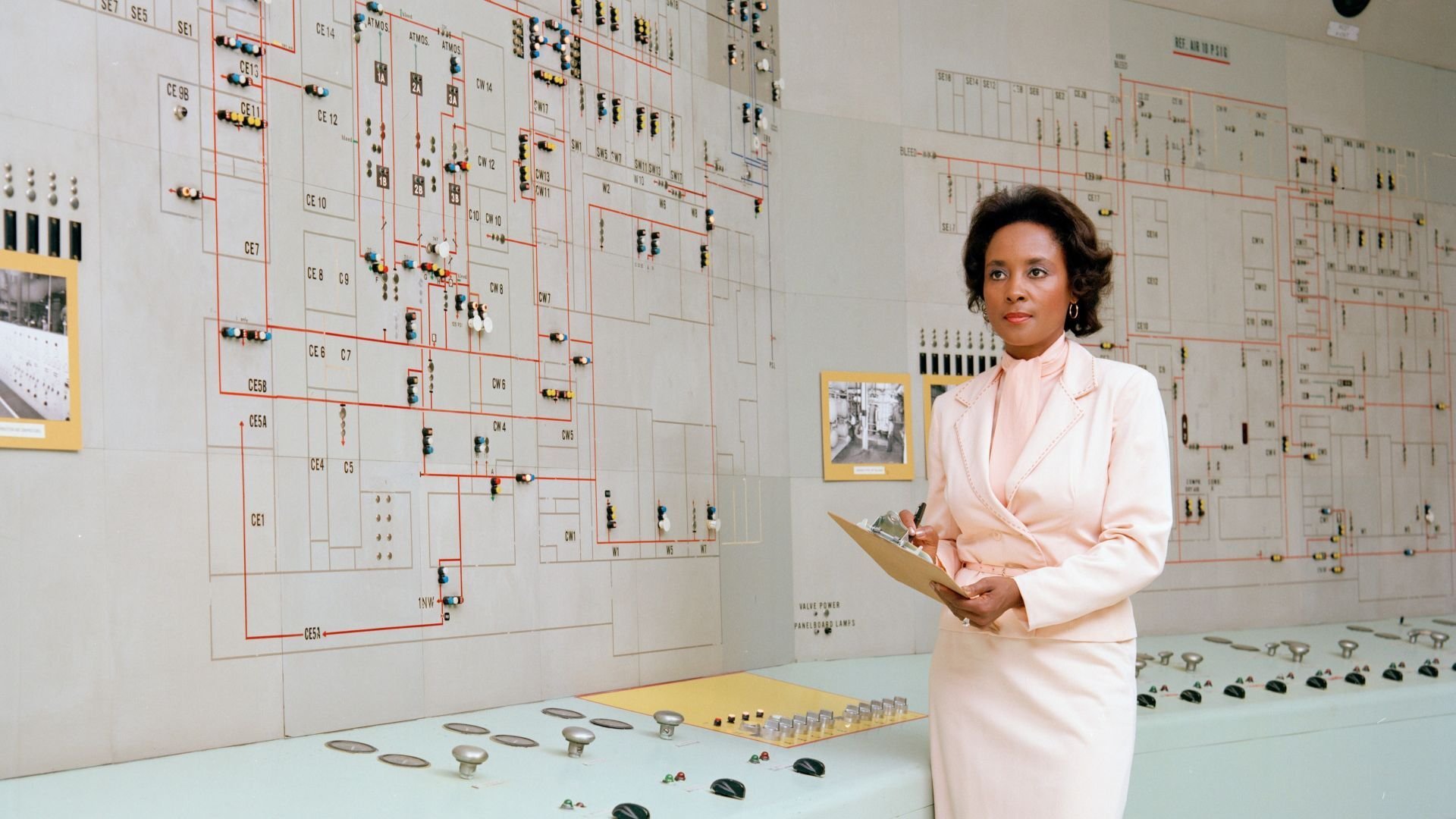
Annie Easley: 1933–2011
The 'human computer', Annie Easley, is one of the most famous and influential women in computer science. She joined NASA's earlier counterpart, NACA, for three decades, as one of only four African American employees at the time.
When computer science developed to the point that human computers were unnecessary, Easley became a computer programmer and developed code to improve the energy efficiency of batteries. This early research contributed to the first hybrid cars and space technology. Easley's legacy goes beyond her computing successes. She worked hard to promote gender equity and resolve racial discrimination in STEM.
Modern information systems
Mary Coombs: 1929–2022
The first female commercial programmer, Mary Coombs, was influential in Britain's early computing. Coombs worked for the Lyons Electronic Office (LEO) computer, the first computer designed for use in an office. This machine was designed for stock control, ordering, statistics, and payroll. It was the world's first automated computer system for commercial businesses, and Mary Coombs worked alongside nine men to help transform office work.
After her work at LEO, Coombs went on to write computer manuals and trained as a teacher to help people with disabilities learn computer programs.
Dina St Johnston: 1930–2007
This early pioneer was the founder of the UK's first independent software production company. St Johnston worked at the British Non-Ferrous Metals Research Association (BNFMRA) for six years, until a lack of promotion forced her to leave.
St Johnston made a name for herself at Elliott Brothers Ltd, an early computer company. At Elliott Brothers, she worked on software for early computers, including programs used to calculate missile trajectories. In 1958, she left Elliott Brothers to form her own company: Vaughan Programming Services (VPS). This software company delivered solutions for some of the biggest names at the time, including the BBC, Unilever, and British Rail.
Mary Wilkes: 1937–present
Wilkes is best known for her work on the LINC computer (Laboratory Instrument Computer). This was one of the first personal computers, and she even owned one at home. It might be commonplace today, but Wilkes was revolutionary in her time.
She joined the Digital Computer Group at MIT's Lincoln Laboratory and developed the computer's operating system, making technology more accessible and user-friendly. Her pioneering work advanced the industry and foreshadowed the personal computer revolution that shapes our world today.
Karen Spärck Jones: 1935–2007
Today, we rely on Google and other search engines for the most basic tasks. We can thank British computer scientist Karen Spärck Jones for that. It's hard to imagine a day going by without using her work. This search engine pioneer worked on the Inverse Document Frequency (IDF). This is a method to rank search results. And it's still used today.
Jones became a pioneering figure in information science, natural language processing and information retrieval, which continue to underpin how modern technologies work. She was also an advocate for women. Jones is famously quoted: "Computing is too important to be left to men."
Her legacy is also recognised through an annual award established by the BCS Information Retrieval Specialist Group in her name.
Contemporary women in computer science
Successful women in STEM aren't a thing of history. There are many women in computer science making history today.
Here are the most influential women currently pushing boundaries in the field.
Radia Perlman
Sometimes called the “Mother of the Internet”, although she has distanced herself from the title, Perlman developed the Spanning Tree Protocol, which became fundamental to the operation of network bridges. It's this invention that makes the internet as we know it possible. You can thank Perlman every time you do something as simple as send an email or browse the internet.
Today, Perlman is actively still working on networking, network security, and cryptography.
Joy Buolamwini
Computer scientist and the founder of the Algorithmic Justice League, Joy Buolamwini is a leading woman in STEM advocating for fairness in AI.
Her research identified significant differences in the performance of commercial facial-analysis systems across skin tone and gender categories, helping to bring greater attention to bias and accountability in the use of artificial intelligence.
Jeannette Wing
Jeannette Wing has held leadership positions at Columbia University, Microsoft Research, and the National Science Foundation. She's a prominent computer scientist who has popularised the concept of 'computational thinking'.
The concept frames problem-solving through the lens of computer science by using a systematic process to break complex problems into smaller, manageable parts and design step-by-step algorithms for the computer to execute.
Megan Smith
Megan Smith has played a transformative role in bridging technology and public service. Smith held senior roles at Google, including as Vice President, before becoming the first woman to serve as US Chief Technology Officer, a position she held under President Barack Obama from 2014 to 2017. She's worked to support diversity in tech by expanding access to technology and promoting STEM education.
Smith holds a bachelor's degree and master's degree in mechanical engineering from the Massachusetts Institute of Technology (MIT), and is a role model to future women in computer science. Her leadership highlights the importance of women in innovation and policy-making.
Today's innovative projects led by women
Women are leading projects that push boundaries of computer science and technology. Across the globe, women are developing advanced algorithms to combat cybercrime and pioneering ethical AI systems to reshape industries.
For instance, Joy Buolamwini's Algorithmic Justice League is a non-profit organisation that tackles the ethical impacts of AI. Buolamwini's work promotes an equitable and accountable artificial intelligence, inspired by her own experience with a discriminatory machine. Buolamwini has been recognised as one of the most influential women in computer science and has been named as one of Forbes' 30 Under 30 and Fortune's World's 50 Greatest Leaders. She's also the author of the TED talk: How I'm Fighting Bias in Algorithms.
This is just one example of women not only contributing to scientific development, but ensuring that technology serves us in ethical and inclusive ways.
How to get into computer science as a woman
Building a career in computer science starts with developing the right skills and confidence. And while women are still underrepresented in the field, there are more routes, communities and opportunities than ever to help women learn, connect and progress.
Community and mentorship
Finding a community can help you build confidence, share experiences and make professional connections in STEM industries as you develop your career alongside your male counterparts. Joining coding groups for women and befriending other women in the field is a great way to surround yourself with greater diversity, while also developing your skills and possible even discovering new opportunities.
Training courses and education
Programmes like Girls Who Code and Black Girls Code equip women with technical skills and confidence, as well as encouraging a like-minded community. Many not-for-profits also offer scholarships and outreach programmes to promote gender equity in STEM and encourage young generations to pursue computer science and STEM roles early.
Careers support
Many of the communities and courses mentioned above will likely also offer some form of career support or mentorship, even if it's just in the form of online guides and resources. And if you’re based in England, you can also use the National Careers Service for free careers information, advice and guidance, from exploring different technology roles to developing your skills and preparing for applications.
For those of you planning to study a STEM subject at degree level, many degree providers offer their own form of career support that may include interview practice, CV and application advice, and mentoring or coaching. At Walbrook, all our students can access careers support from day one, through our 24/7 online Careers Hub, created and run by our team of careers professionals.
Careers for women in computer science
Cybersecurity engineers. Software developers. Data scientists. AI and machine learning specialists. Computer science skills can lead to careers across a wide range of growing and evolving areas of technology.
Technology-related roles feature prominently among the fastest-growing jobs globally to 2030, according to the World Economic Forum's Future of Job's Report 2025. The roles include Big Data Specialists, FinTech Engineers, AI and Machine Learning Specialists, and Software and Application Developers.
And opportunities aren't limited to traditional tech companies. Across the UK, organisations in sectors including financial services, healthcare, manufacturing and the public sector need people with technology skills. Explore our guide to the UK tech job market in 2026 to see where employers are hiring and how the skills they're looking for are changing, as well as our guide to fields of work in computer science to explore all your options.
Closing the gender gap in computer science
In a recent study done by Walbrook, we surveyed 1,000 female students aged 16–19 across the UK to understand the barriers facing women in STEM. Our research suggested that while 70% of respondents were interested in pursuing careers in STEM subjects, it's perceived as requiring too much time and effort.
Lasting change requires educational bodies to encourage women and girls to pursue computer science. Support can begin during secondary education, but routes into computing should remain open at every stage of a woman's career. Making education more accessible is one way to tackle gender inequality and widen routes into STEM.
At Walbrook, our computer science programmes are 100% online and built for digital from day one. With full and part-time study options, they're designed to make postgraduate study easier to fit around work, family and life.
Get your Master’s in computer science
Women have long been central to the story of computer science. From Ada Lovelace's visionary algorithms to today's leaders in AI and internet infrastructure, women have always been key to technological advancement. Diversity enables innovation. It keeps tech fair and inclusive.
And while women remain underrepresented in STEM, that doesn't limit what's possible. Building relevant skills and experience can open routes into a diverse range of careers – and give more women the opportunity to help shape the technology we all use while closing the gender gap.
Our MSc programmes in Computer Science empower women to innovate a better future. Discover more about our courses, and become a leader in the field:
Women in STEM FAQs
What percentage of computer science jobs are held by women?
Around only 22% of tech and computer science roles are filled by women today (Tech Talent & Salary Report 2026, Harvey Nash). But historically, women have been a driving force in the computing workforce. Representation later declined as personal computing grew, with researchers pointing to factors including gender stereotypes and the way computers were marketed primarily towards men and boys.
Why do we need more women working in computer science?
Technology underpins almost every part of modern life. To make sure it works for everyone, it needs to be shaped by diverse voices. More women in computer science means more perspectives and ideas at the table, leading to fairer, more innovative solutions.
And this isn’t just about gender. Diversity across ethnicity, culture, and socio-economic background strengthens teams and drives better decision-making. The more varied the experiences behind the code, the more inclusive and effective the technology becomes.
What STEM field has the most women?
Among core STEM degree subjects in UK higher education, physical sciences currently has the highest proportion of women. According to WISE analysis of HESA data for 2024/25, female university students achieved 46.6% of physical sciences qualifications – and almost 50/50 split with male students.
Representation is lower in other core STEM subjects. Women accounted for 37.1% of mathematical sciences qualifications, 27.9% of computing qualifications and 23.2% of engineering and technology qualifications.
But there are encouraging signs of progress: women's representation in physical sciences has continued to grow since 2020, while computing has seen a significant increase in the number of qualifications achieved by women. Across STEM subjects, women are also consistently better represented at postgraduate than undergraduate level.
Can I get into STEM later in life as a woman?
There’s no single age or career stage when you need to enter STEM, and moving into technology later in your career is a well-established route. Harvey Nash’s 2026 research (Tech Talent & Salary Report 2026) found that women were more likely than men to have moved into tech after previously working in a non-tech role, showing that a career in technology doesn’t have to start at a young age.
If you’re considering postgraduate study, a conversion degree can provide a route in without requiring a bachelor's degree in computer science. Our MSc Computer Science degrees are specifically designed for people who didn’t study computing at undergraduate level. You can apply with a UK honours degree at 2:2 or above in a subject other than computing, but we also encourage you to apply if you have 2+ years’ relevant professional experience in one or more computing-related roles.